
1. The principle of selective coordination
In a multi-level power distribution system, protective devices must be coordinated so that excessive current is interrupted by the device nearest the event. This confines the interruption and keeps healthy branches energised.
2. What happens during a severe voltage surge?
At normal voltage, the SPD varistor element has a high resistance. During a voltage surge, its resistance drops sharply and the SPD provides a temporary low-impedance path to divert the surge current.
If the SPD is correctly selected for operating voltage, class and permissible surge current, it can handle the event without damage. However, under certain conditions, the current flowing through the SPD circuit may cause a circuit breaker to trip.
This does not necessarily mean that the SPD has failed. In practice, the SPD can remain serviceable while power to the switchboard is lost because a protective device has tripped.
3. An SPD without a dedicated circuit breaker
When an SPD is connected to the switchboard busbars without a dedicated circuit breaker, the surge current path passes through the incoming circuit breaker. If it trips, the entire switchboard and all connected loads will be disconnected.
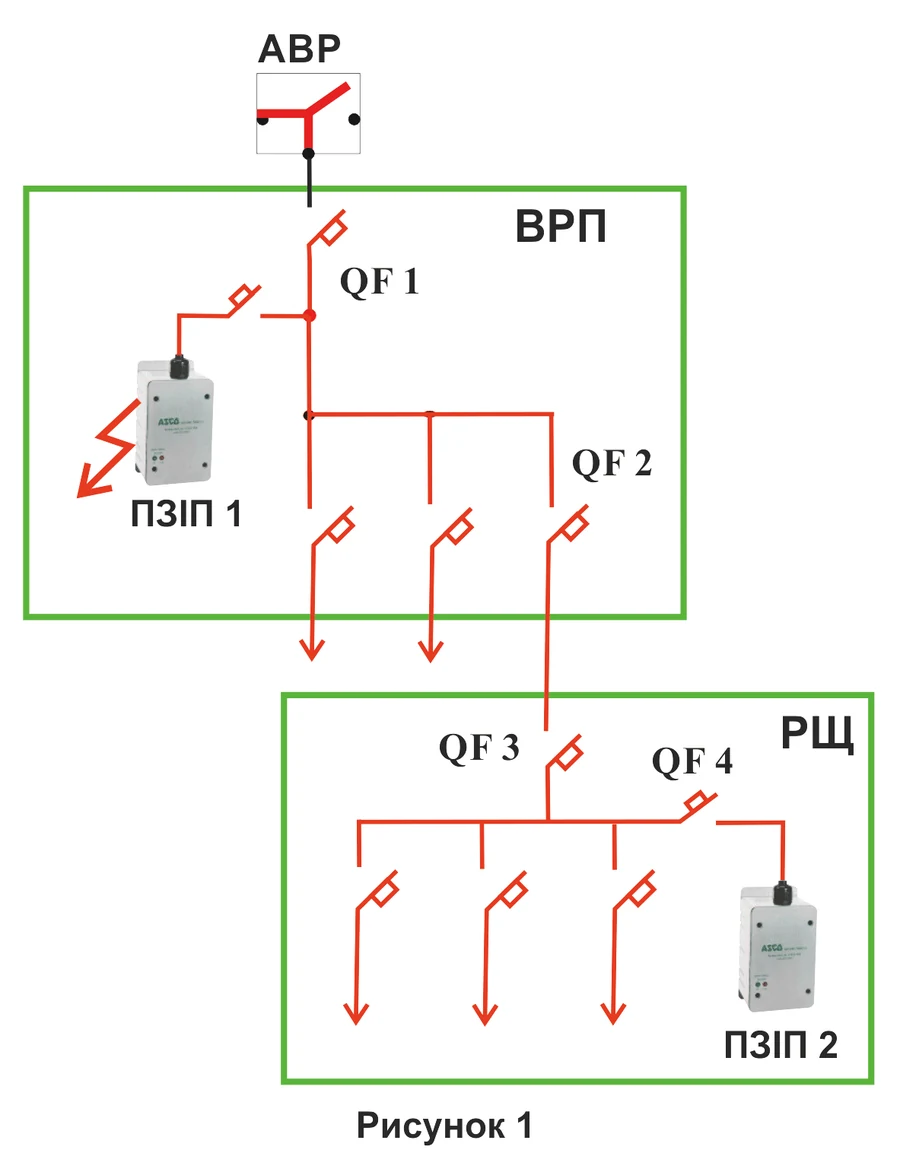
Important: an incorrect connection or an SPD operating voltage unsuitable for the supply can cause the SPD to enter a conducting state, operate the protective device and suffer subsequent damage if it is repeatedly re-energised without the cause being corrected.
4. A dedicated circuit breaker in the SPD circuit
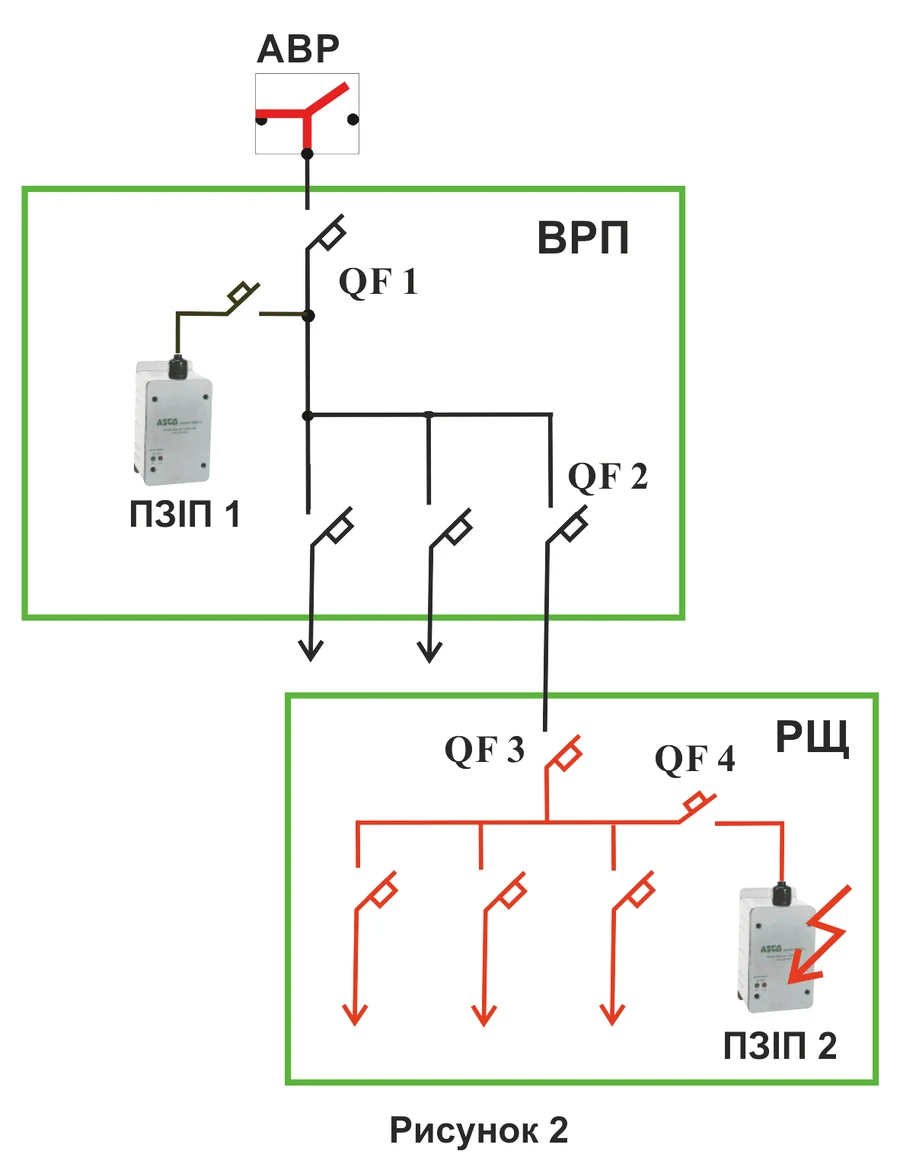
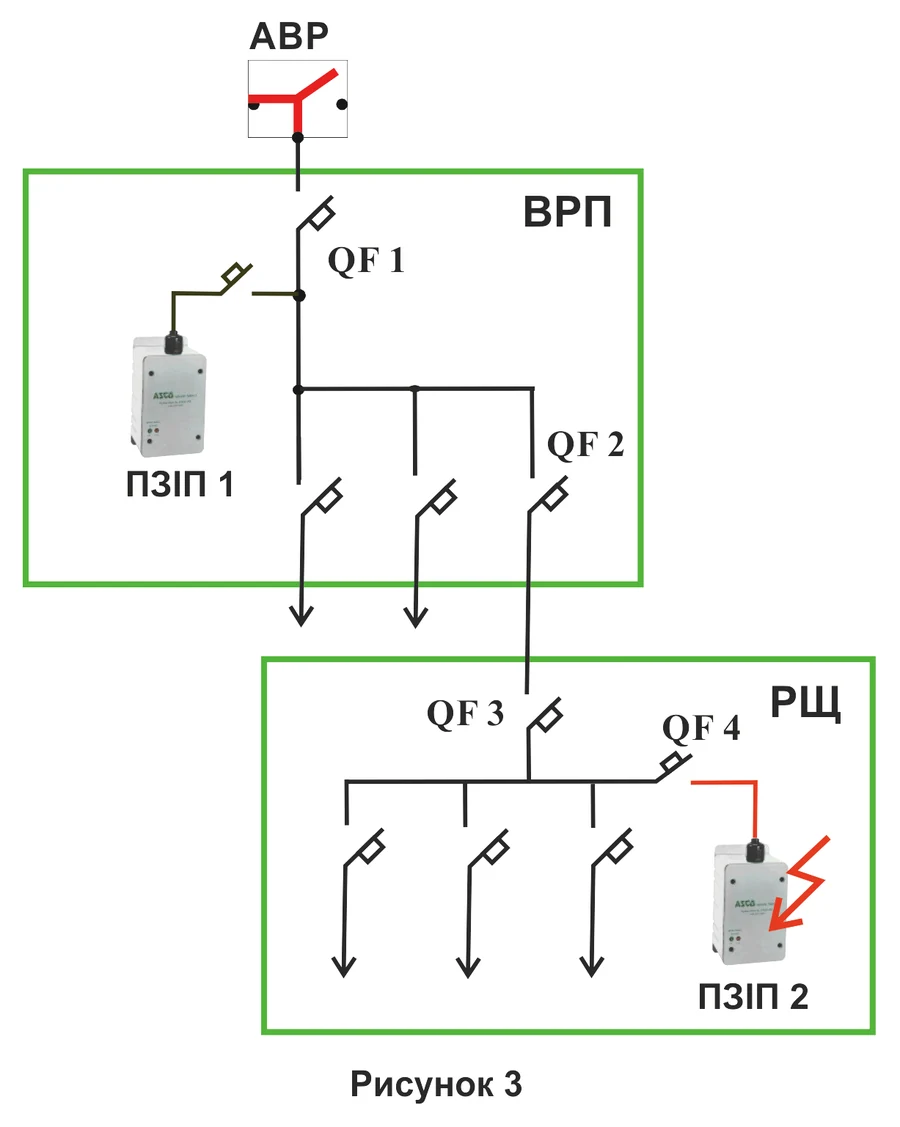
A practical solution is to connect the SPD through a dedicated circuit breaker. The SPD then forms a separate branch from the busbars, with its circuit breaker as the nearest protective device.
With correct device selection and coordination, the circuit breaker in the SPD circuit will trip while the incoming circuit breaker and other switchboard loads remain connected.
5. What must be checked during design?
- the maximum permissible backup protective device rating specified in the SPD manufacturer documentation;
- the rating, tripping characteristic and breaking capacity of the dedicated circuit breaker;
- the characteristics of the incoming circuit breaker and the conditions for selectivity between the devices;
- the prospective short-circuit current at the installation point;
- the cross-sectional area and length of the SPD connecting conductors;
- the provision of signalling for circuit-breaker tripping or loss of SPD protection.
Installing an additional circuit breaker does not by itself guarantee selectivity. Its parameters must be coordinated with the SPD, the incoming protective device and the actual power supply system.
For a complete LV switchboard with ATS, these checks should be considered together with the redundancy arrangement and load distribution.
6. Practical conclusion
An SPD protects equipment against voltage surges, but its interaction with circuit breakers must be considered at the design stage.
If an SPD is connected directly downstream of the incoming circuit breaker, a high surge current can disconnect the entire switchboard even if the SPD itself is undamaged. A dedicated circuit breaker in the SPD circuit allows the interruption to be confined and maintains power to other loads.
To select SPDs for ATS equipment and LV switchboards, provide the power supply and earthing diagrams and details of the installed protective devices.