One cable: charging and power delivery
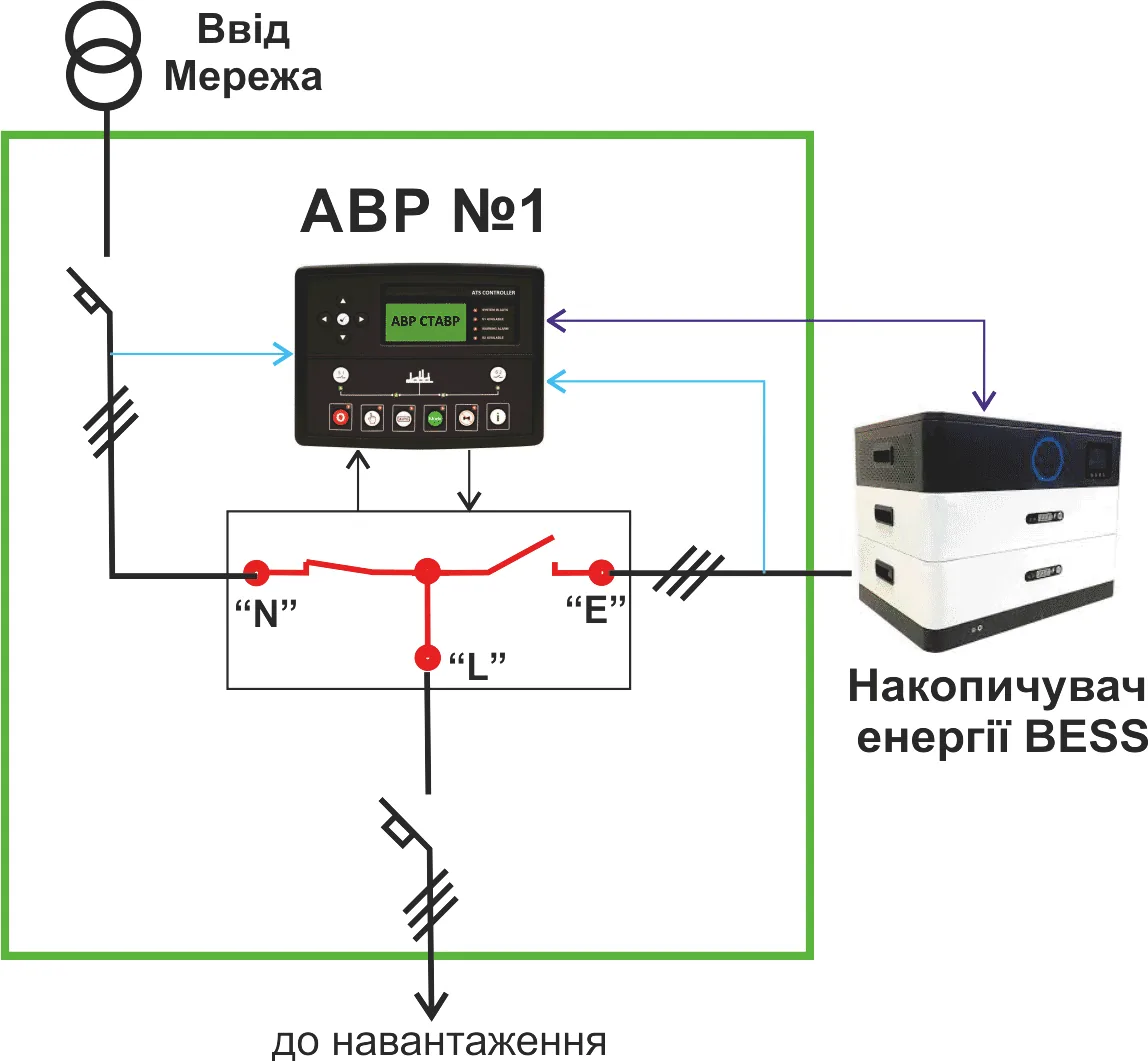
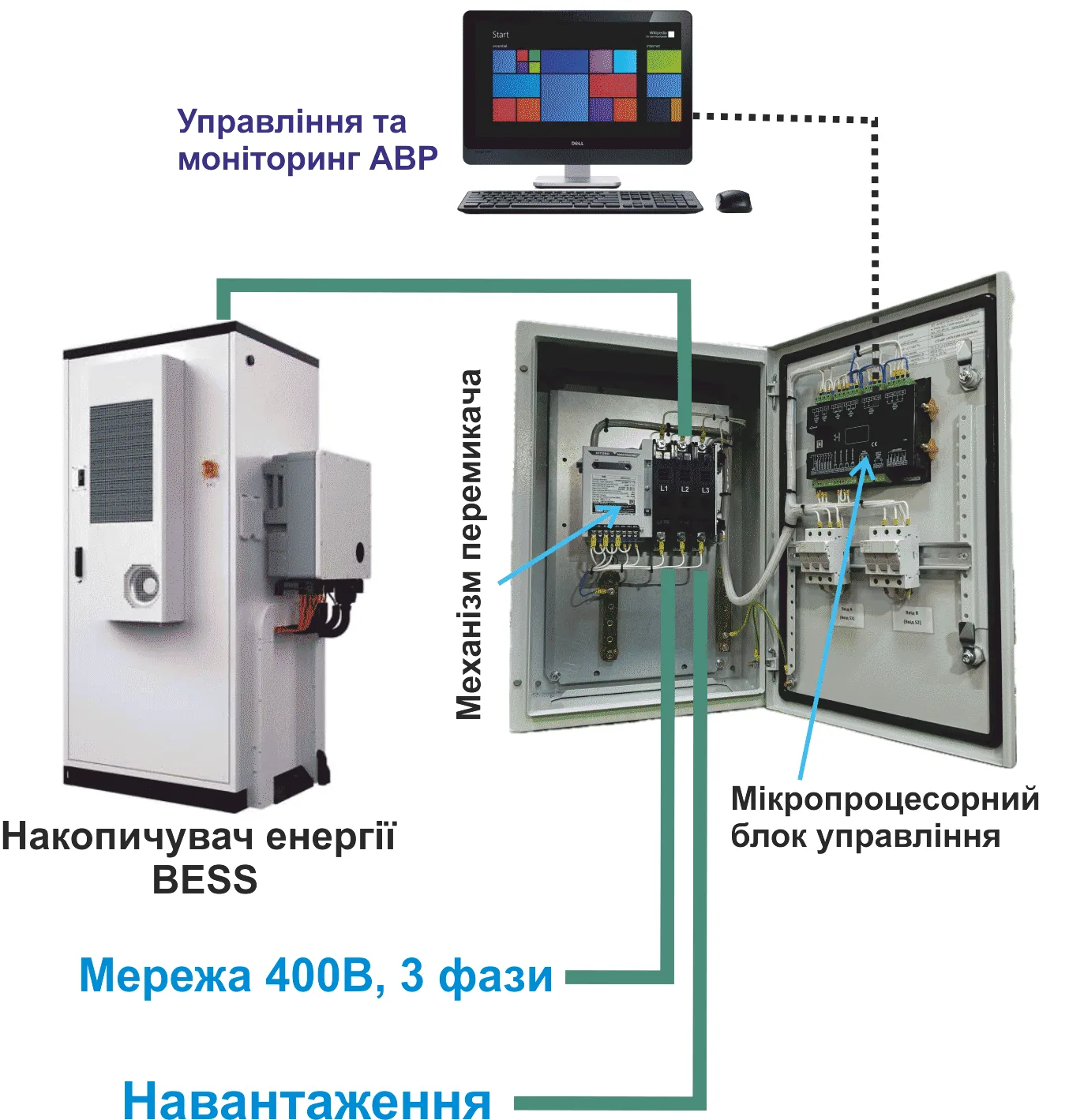
The BESS controls the ATS or checks its status.
Click to open the diagram ↓Open below ↓
A BESS is more than a large battery. In a backup power system, it operates as a separate energy source that must be correctly disconnected from the grid and coordinated with the generator, UPS, inverter and load.
The ATS arrangement depends on the BESS connection architecture: charging and power delivery may use a single power cable or separate circuits. This determines the grid disconnection logic, operating permissives and return to normal operation.
An ATS for BESS provides safe switching, source status monitoring, control signals, manual operation and protection against backfeed.
Click a scenario to open a panel below with a diagram and a brief explanation. Only one diagram is displayed at a time to keep the page clear.
The BESS controls the ATS or checks its status.
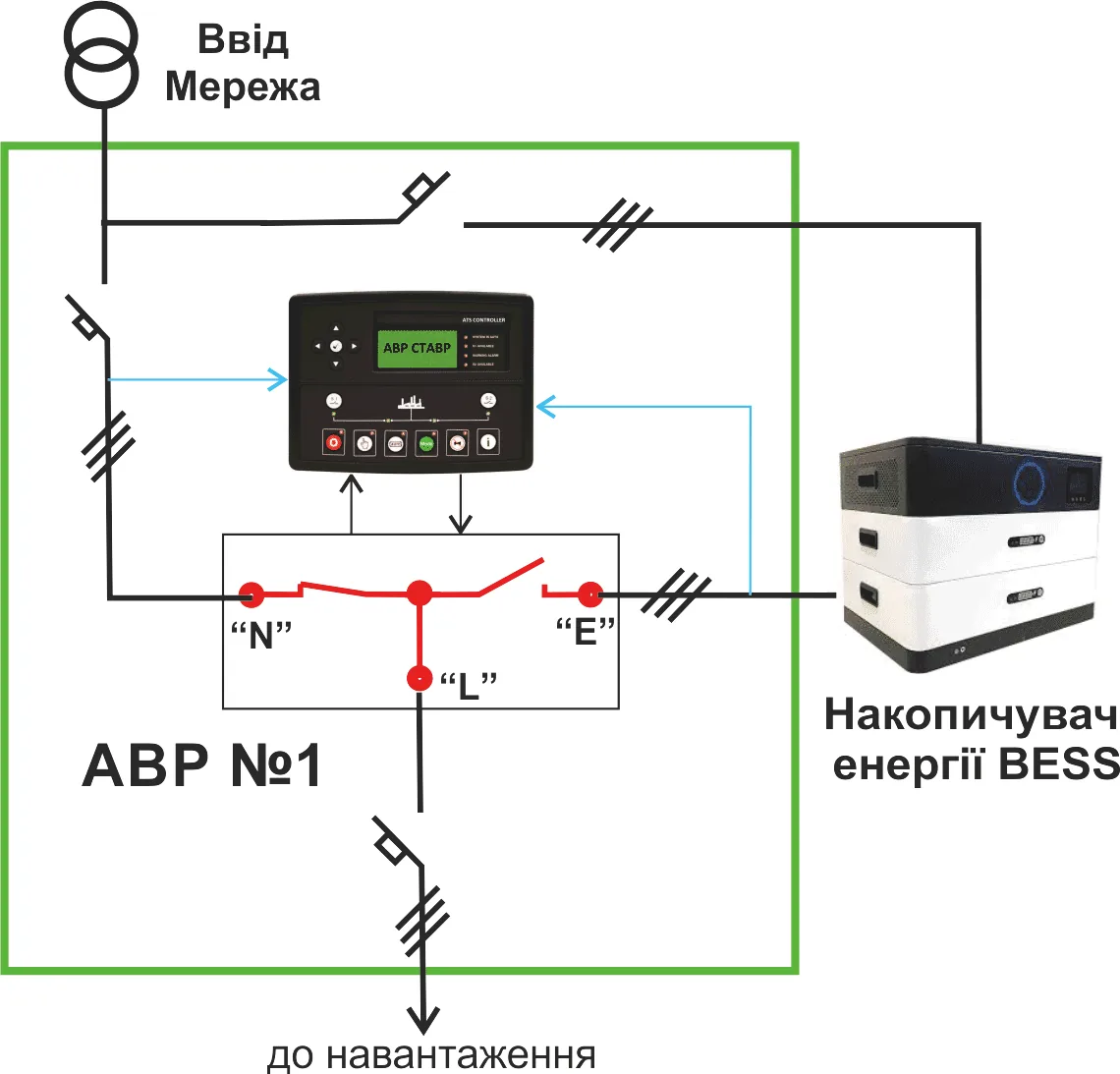
Click to open the diagram ↓Open below ↓Separate charging and BESS output circuits.
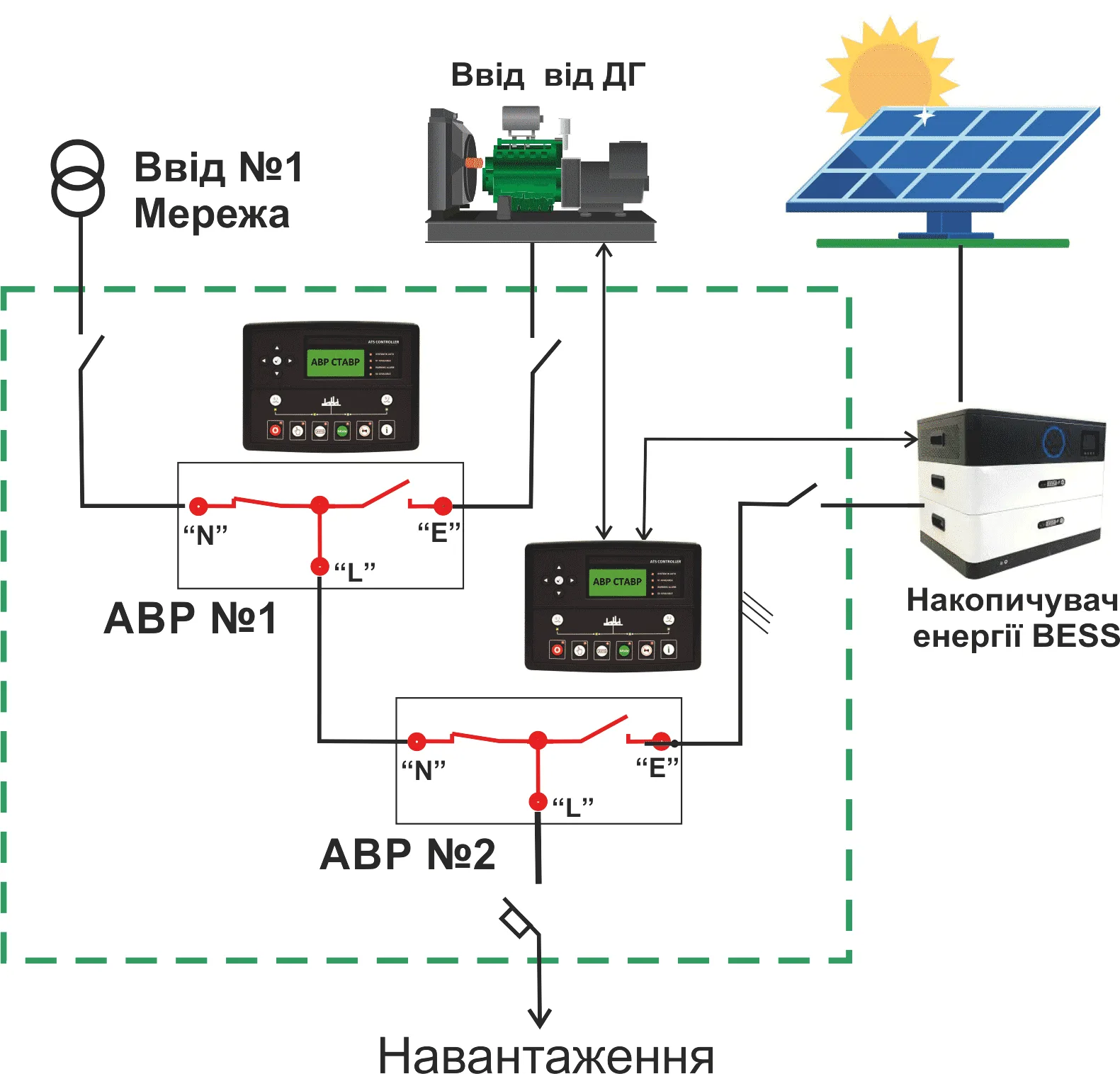
Click to open the diagram ↓Open below ↓BESS for short outages, diesel generator for extended autonomy.
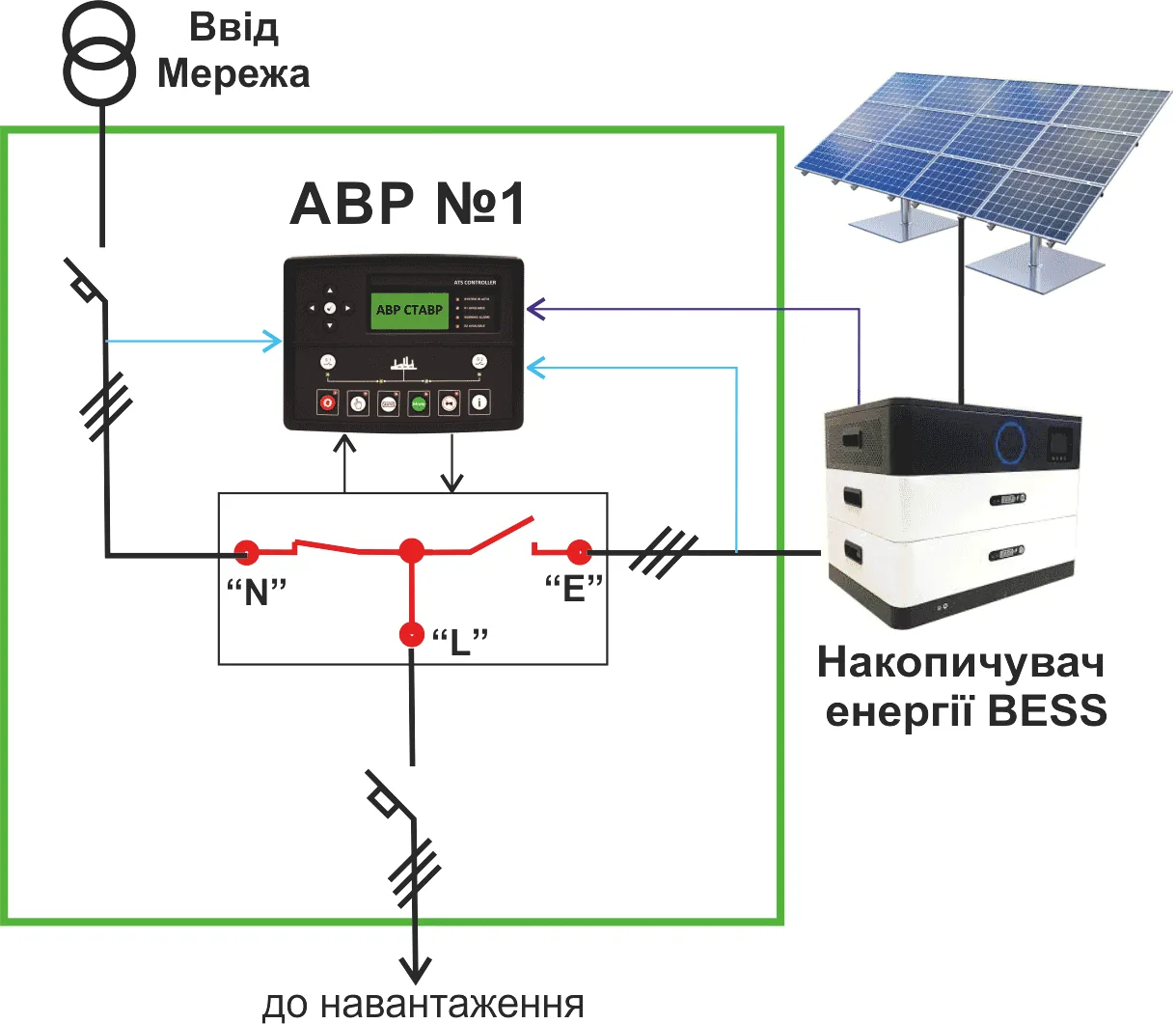
Click to open the diagram ↓Open below ↓Solar generation charges the BESS, while the ATS controls the safe supply of power to the load.
Click to open the diagram ↓Open below ↓Monitoring of mains, BESS and load parameters, and ATS events.
Click to open the diagram ↓Open below ↓In some systems, the BESS charges from the mains and supplies the load through the same power path. Before entering standalone mode, the system must confirm that the load has been disconnected from the external grid.
When BESS charging and load supply use separate circuits, the ATS operates more like a conventional arrangement: the load is supplied either from the mains or from the BESS output.
A BESS can supply power during short or medium-duration outages, while the generator can support the facility during a prolonged mains outage or when the BESS is discharged.
In systems with solar generation, the BESS can store energy and support the load when the mains supply is unavailable or of poor quality. The ATS provides safe disconnection from the external grid and controlled load transfer.
For complex BESS systems, switching the power circuit is only part of the task: the status of the sources, load and ATS, and system events must also be visible. Monitoring helps establish which source is supplying the load, when the BESS was operating, when the mains returned and whether any fault conditions occurred.
In BESS systems, a switching error can be more dangerous than a simple loss of power. Incorrect transfer can cause backfeed, energise the grid or leave the load in an undefined operating state.
For preliminary selection, describe the BESS architecture: one or two power paths, power sources, voltage / phases, BESS power rating, load current, presence of solar PV or a diesel generator, and control signals.
If you have a panel photograph, single-line diagram or technical specification, attach it to the enquiry form.
The form is collapsed by default. Click to send the BESS diagram, power source parameters and load details.
Describe the BESS connection arrangement, power sources, presence of a diesel generator / solar PV plant, control signals and load. The main contact and technical information fields are required. Attach a diagram or technical specification if needed.