ATS — for safe backup power

ATS for generators

A solution for automatic power transfer between the normal mains supply and a generator. Used where loss of power creates a risk to equipment, a process or facility safety. Mechanical and electrical interlocking prevent the mains and generator from being connected to the load simultaneously.

ATS overview →
Overview

Mains / generator ATS

An ATS for a generator automatically monitors the availability and quality of the normal mains supply, starts the generator or receives its readiness signal, and transfers the load according to the specified logic. The solution is used where a power outage could stop equipment, an industrial process or critical building services.

In STAVR products, the transfer switch, controller, protection, interlocks, indication and connection terminals work as a single system. An ATS for a generator is therefore more than a switch between mains and diesel generator: it is a complete backup power control panel.

The ATS configuration is selected to suit the current, voltage, number of poles, load type, generator operating mode, and requirements for manual operation, interlocking, indication, supervisory monitoring and service access.

Fast open-transition transfer For facilities where a brief interruption to the supply is acceptable for the process.
CTTS — no-break transfer A special configuration for momentary parallel operation of synchronised sources.
Automation

ATS controller capabilities

The functions and communication protocols available depend on the selected ATS configuration.
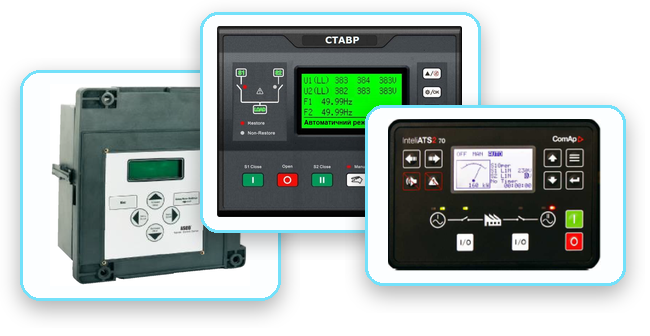
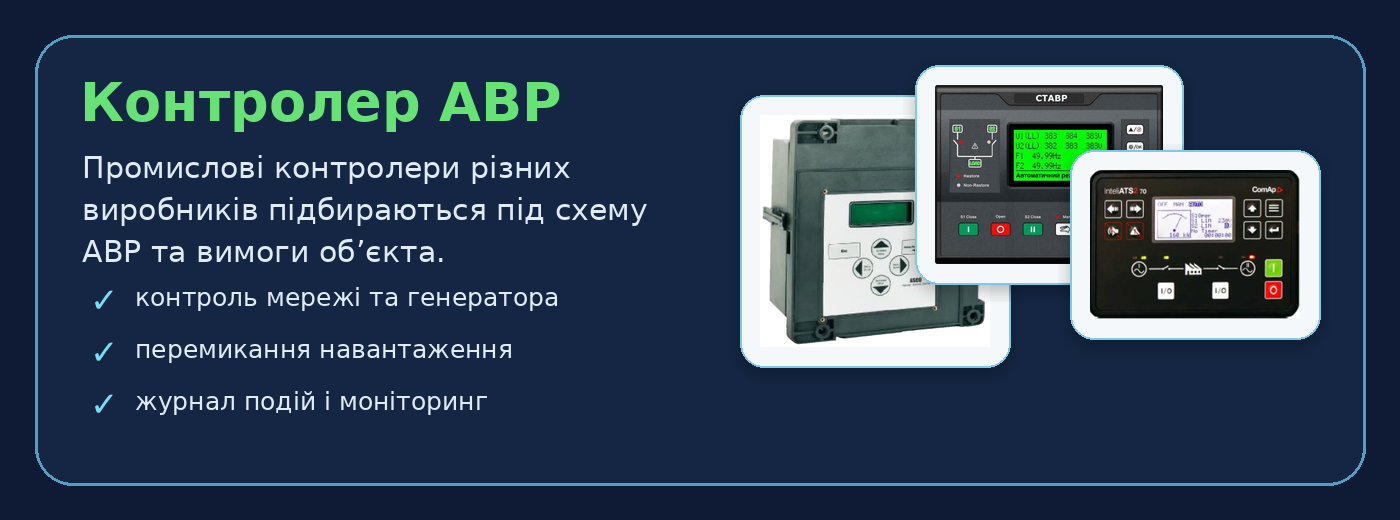
Industrial controllers used in STAVR ATS assemblies
  • voltage, frequency and phase sequence monitoring;
  • automatic generator starting and stopping;
  • monitoring of diesel generator readiness to accept the load;
  • time delays, interlocks and switching device position monitoring;
  • alarm and event logging;
  • remote monitoring, depending on the configuration.
More about ATS controllers →
Two-position ATS Mains or generator. A conventional solution for most facilities.
Three-position ATS Mains / off / generator. Allows controlled disconnection of the load.
Information required for selection Current, voltage, number of poles, load type, diesel generator operating mode and monitoring requirements.
Features

Features of an ATS for a generator

Load protection The ATS does not connect the load to a source that fails to meet the specified availability criteria. In a three-position configuration, the load can be disconnected from both sources under fault or abnormal operating conditions.
Reliable contact assembly Segmented power contacts with low electrical resistance reduce heating and losses at the switching point. This improves ATS operating stability under sustained load.
Power contact protection Arcing contacts take the effects of the electrical arc during switching. The main contact pair is subjected to less stress, extending the service life of the transfer switch.
Arc extinction The arc-extinguishing system helps suppress the arc rapidly during load transfer. This reduces wear on the contact assembly and improves switching reliability.
Self-cleaning contacts The movement of the contact assembly produces a wiping action as the contacts close. This helps maintain a good electrical connection under real operating conditions.
Resilience under abnormal conditions The transfer switch is selected to account for short-duration overloads, voltage dips and current surges in the supply. For the customer, this provides a greater reliability margin under demanding conditions.
In-phase transfer For motor loads, transfer can take place when the phase relationship between the sources is within permissible limits. This reduces electrical and mechanical stress on fans, pumps and compressors.
Manual switching The ATS can provide manual transfer using a lever for servicing, testing or operation under an agreed procedure. This is important for facilities that require a controlled manual operating mode.
Pulse-operated solenoid mechanism The switching mechanism operates from a brief pulse and does not require continuous coil power to maintain its position. This reduces heating of the operating mechanism and energy losses.
Modular construction The layout facilitates installation, service access and inspection of the contact assembly. Maintenance takes less time and carries a lower risk of errors.
Microprocessor control The controller provides generator start and stop logic, transfer delays, status indication and event logging. This simplifies operation and the analysis of fault events.
Supervisory control and monitoring The ATS can transmit status, alarm and parameter signals to the local network or the facility monitoring system. Operating personnel can see the power supply status and identify the cause of an event more quickly.
Technical specifications

Basic parameters for preliminary selection

Utilisation categoryAC-33B
Standards complianceDSTU EN 60947-6-1:2018 and UL 1008
Supply arrangementMains / generator; generator / generator
Transfer modeHigh-speed transfer / no-break transfer
No-break transferWhen two sources are available, the ATS transfers the load when their phase relationship is within permissible limits.
Voltage230 / 400 V; other options to project specifications
Number of poles2P / 3P / 4P depending on the connection arrangement
Metal enclosure typeIP65 metal enclosure; other degrees of protection to project specifications
CurrentSelected to suit the load and operating conditions: 30 to 5000 A
Operating modesAutomatic, manual, service / bypass as required. Manual transfer using an operating lever is available.
Options
  • Supply quality monitoring
  • Event log
  • Alarm indication
  • Remote monitoring
  • Additional switching and protective devices as required
  • Fast-acting surge protective device (SPD) module with surge counter
In-phase transferFor motor loads: fans, compressors and similar equipment
Enquiry

Send information for ATS selection

For preliminary selection, a brief description of the power sources, load, current, voltage and operating conditions is sufficient. A photograph of the existing panel or main distribution switchboard will help us assess the solution more quickly, but is not essential.